
Audiobooks at Bedtime: Benefits, Drawbacks, and How to Use Them Well
September 16, 2026
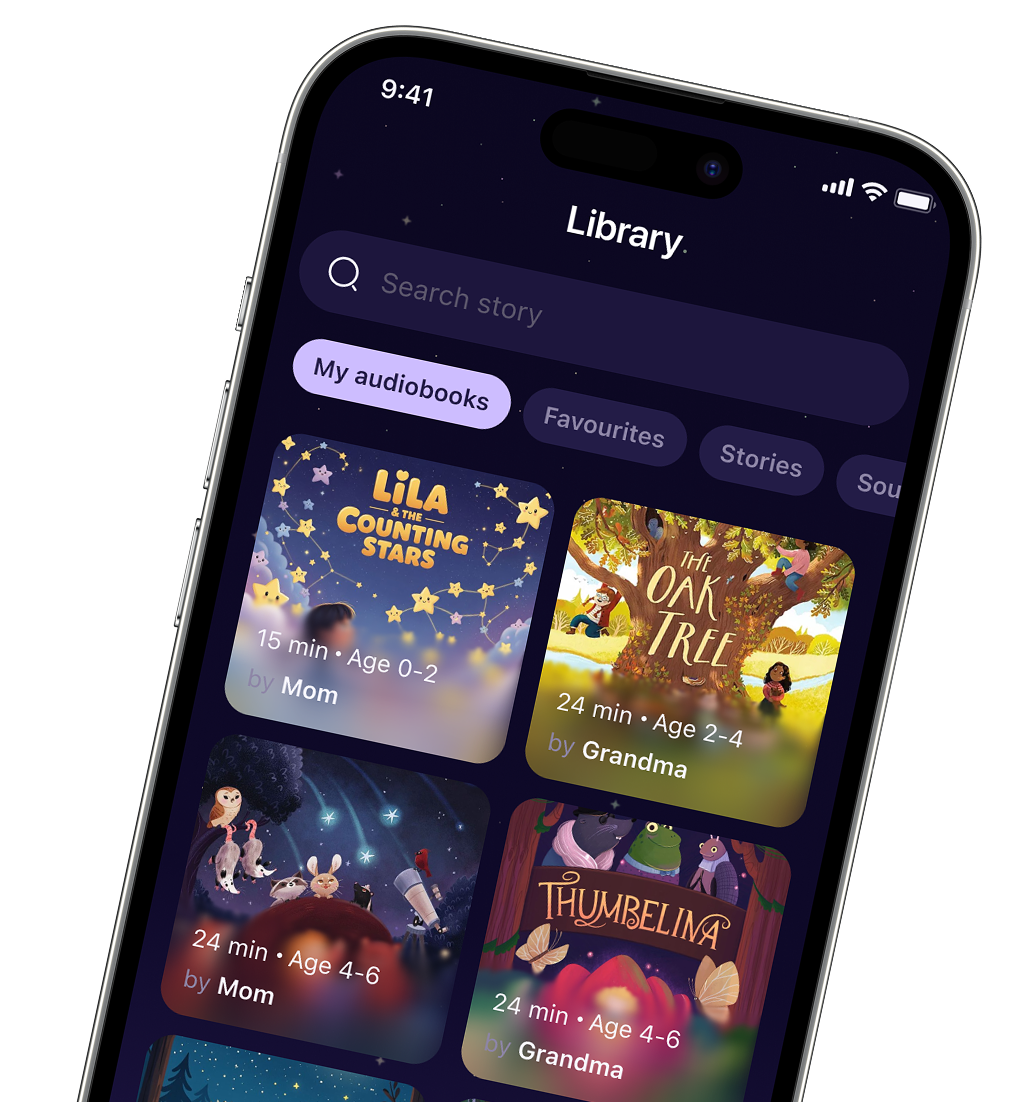
A decade ago, "reading a bedtime story" almost always meant a physical book and a parent's voice in the room. Today, it's just as likely to mean pressing play on an audiobook app and letting a familiar (or narrated) voice carry a child into sleep. Search "are audiobooks good for kids at bedtime" and you'll find plenty of strong opinions but not much nuance. The honest answer is that audiobooks can be a wonderful part of a children's sleep routine — genuinely calming, educational, and screen-free — but only when they're chosen and used thoughtfully. Here's what the research and real-world bedtime routines actually suggest.
Why Audiobooks Have Become a Bedtime Staple
Bedtime has always been one of the most tiring parts of the day for caregivers, and audiobooks solve a real problem: they let a child have a rich, story-driven wind-down experience even on nights when reading aloud from start to finish just isn't possible. A parent who works evenings, has more than one child needing attention, or is simply running on empty can still give their child a calm, consistent cue as part of their children's sleep routine.
Audiobooks have also grown alongside a broader shift away from screens before sleep. Because they're audio-only, a child can listen with the lights off, eyes closed, already settling into the physical stillness that helps the body prepare for sleep — something a video or tablet game actively works against.
The Real Benefits of Bedtime Audiobooks
When audiobooks are well-matched to a child's age and used as part of a predictable bedtime routine, families and educators report several genuine advantages for children's sleep and development:
- Vocabulary and language growth. Listening to narrated stories exposes children to richer sentence structures and a wider range of words than everyday conversation typically includes, which supports language development over time.
- Longer attention and listening skills. Following a story purely through sound — without visual cues to lean on — asks a child to build a mental picture, which strengthens focus and listening comprehension.
- Imagination and creativity. Without an on-screen image doing the work, children fill in characters, settings, and action themselves, which is part of why audio storytelling is often described as more imaginative than screen-based media.
- A calm, consistent sleep cue. A predictable "story time" signal — the same kind of routine element pediatric sleep guidance has long recommended — helps a child's body recognize that sleep is coming next.
- Comfort from a familiar voice. When the narration is a parent, grandparent, or another loved one rather than a stranger, the story can also become a source of emotional reassurance, especially useful during travel, a caregiver's absence, or a stressful stretch at home.
- A break for exhausted caregivers. Using a recorded story on a hard night isn't a failure to connect — it's simply one more tool in a healthy bedtime routine, alongside nights spent reading together in person.
The Drawbacks Worth Knowing
None of this means audiobooks are automatically good for bedtime in every form. A few real downsides are worth planning around rather than discovering the hard way:
- Volume and device placement matter. Audio played too loudly, or from a device left glowing on a nightstand, can work against the very wind-down it's meant to support. Keep volume low and place the device screen-down or out of the child's direct line of sight.
- Not every story is calming. Fast-paced, suspenseful, or loud stories can be stimulating rather than soothing — great for a car ride, less great for the ten minutes before sleep. Save the exciting adventures for daytime and choose gentler, slower-paced stories for bedtime.
- Autoplay can undo a good routine. A queue that keeps playing new stories after the child has drifted off can delay deep sleep or cause a partial wake-up. Look for a set story length, or a "stop after this story" setting, rather than an endless autoplay feed.
- Over-reliance without variety. Some children come to feel they can only fall asleep with audio playing, every single night, in every setting. Using audiobooks as one part of a routine — alongside a few minutes of quiet talk, a hug, or reading together in person a few nights a week — helps keep the routine flexible rather than fragile.
- Content still needs a caregiver's eye. Not every audiobook marketed for kids is actually written or narrated with young listeners in mind. A quick preview of pacing and tone before adding a new title to the rotation goes a long way.
How to Use Audiobooks Well at Bedtime
A few small habits make the difference between an audiobook that supports a healthy children's sleep routine and one that gets in its way.
Set the same start time every night
Consistency is what makes any bedtime cue effective. Playing the story at roughly the same point in the routine — after teeth are brushed and the lights are dimmed, for example — teaches the body to associate that sound with winding down.
Choose calm, age-appropriate stories
Look for a gentle pace, a soothing narrator tone, and content that isn't scary or overstimulating for your child's age. A story that worked well at age three may need to be swapped out by age six, and that's normal. Not every audiobook marketed to families is actually built with a child's bedtime in mind — Voice of Mama's audiobooks, for example, are written and produced specifically for children, with pacing, tone, and content checked against that goal, which takes some of the guesswork out of choosing well.
Keep the volume low and the screen dark
Play audio at a quiet, steady volume, and keep any screen involved either off or face-down. The goal is a dark, calm room — sound should be the only thing doing the work.
Set a stop point
Whether that's a single story, a fixed sleep-timer length, or an app designed to end automatically, avoid letting audio play indefinitely through the night. A clear stopping point protects deeper, uninterrupted sleep.
Mix it with in-person connection
Even on nights when an audiobook carries most of the story time, save a minute or two for a hug, a "goodnight," or a quick chat about the day. The audio supports the routine — it doesn't need to replace the connection at its center.
Audiobooks by Age
What "works" looks a little different depending on how old a child is:
- Toddlers (1–3): Very short, highly repetitive stories with simple, familiar language tend to land best. Repetition itself is soothing at this age, so hearing the same short story many nights in a row is a feature, not a problem.
- Preschoolers (3–5): Slightly longer stories with gentle narrative arcs work well, especially ones with a calm, singsong narration style. This is also a strong age for building vocabulary through slightly more complex language.
- School-age (6–10): Longer chapter-style stories or serialized audiobooks can hold attention across multiple nights, which itself becomes part of the routine's predictability — "we'll find out what happens tomorrow."
- Preteens and up: Audiobooks can extend into independent listening as children start managing more of their own wind-down routine, though a consistent stop time still matters for protecting sleep.
Audiobooks, Reading Aloud, or Lullabies: What's Right for Tonight?
None of these options needs to "win." Reading aloud offers the most direct connection and is worth protecting on nights there's time for it. Lullabies and calming sleep sounds work well for children who settle better with music or ambient audio rather than narrative. Audiobooks sit in between — offering story-driven engagement and language benefits on nights when an adult can't read the whole thing aloud, or as a welcome addition even on nights when they can.
This is part of what inspired Voice of Mama: a way to bring personalized bedtime stories, lullabies, sleep sounds, and audiobooks together in one place — many of them narrated in a parent's or loved one's own voice — so families can choose whatever combination actually fits their night, without giving up the comfort of a familiar voice. Whether it's a three-minute lullaby or a full audiobook chapter, the goal is the same predictable, screen-free cue that helps a child recognize it's time to rest.
Used thoughtfully, an audiobook at bedtime isn't a shortcut around a good children's sleep routine — it can be one of the best tools in it. Sleep tight, don't let the bedbugs bite.